Marketing
Forecasting Campaign Spend Like a Finance Team
PUBLISHED
AUTHOR

Johe Hyun
Founder and CEO, building growth with a hands-on, end-to-end approach
Former marketing specialist at Yahoo!, Mercedes-Benz, and Nike/Converse, and former CMO at WeWork, now leading tailored marketing for global brands
A forecast is a promise, not a projection
Marketing forecasts often get treated as a best guess that nobody will check. Finance forecasts get audited every quarter. Bringing that same discipline — documented assumptions, sensitivity ranges, a clear owner — to a media plan changes how seriously it gets funded.
When a forecast misses, the goal is not to defend the number. It is to know exactly which assumption broke, so the next forecast is sharper instead of just different.
Write down assumptions before the results come in
Once actuals arrive, it is tempting to quietly rationalize a miss. Locking in assumptions — expected CPM movement, conversion rate, seasonality — before the period starts is what makes a post-mortem honest instead of retroactive storytelling.
Build a range, then defend the midpoint
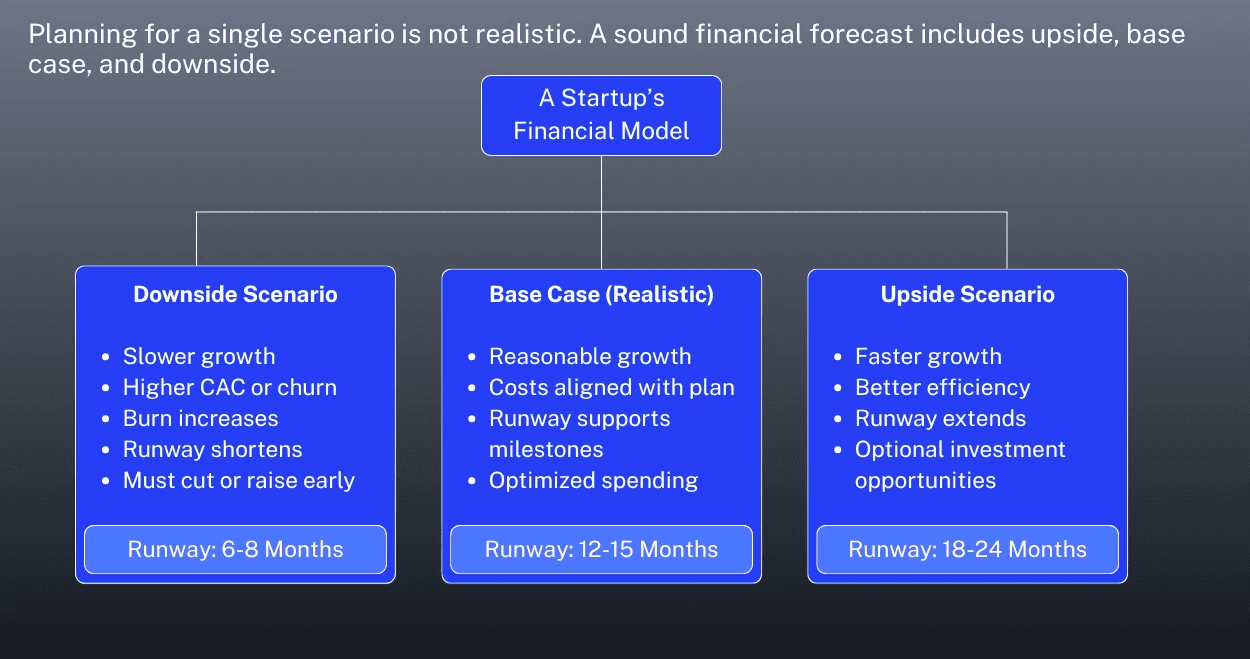
A single-number forecast invites an unwinnable argument the moment reality lands anywhere else. Present a base case with explicit upside and downside scenarios, and be ready to explain what would need to be true for each one to play out.
Reforecast on a fixed cadence, not just when things go wrong
Waiting to reforecast until a plan is visibly off track trains the organization to associate forecasting with bad news. A regular cadence — monthly, tied to the same calendar finance already uses — keeps the forecast a living planning tool instead of a crisis document.
